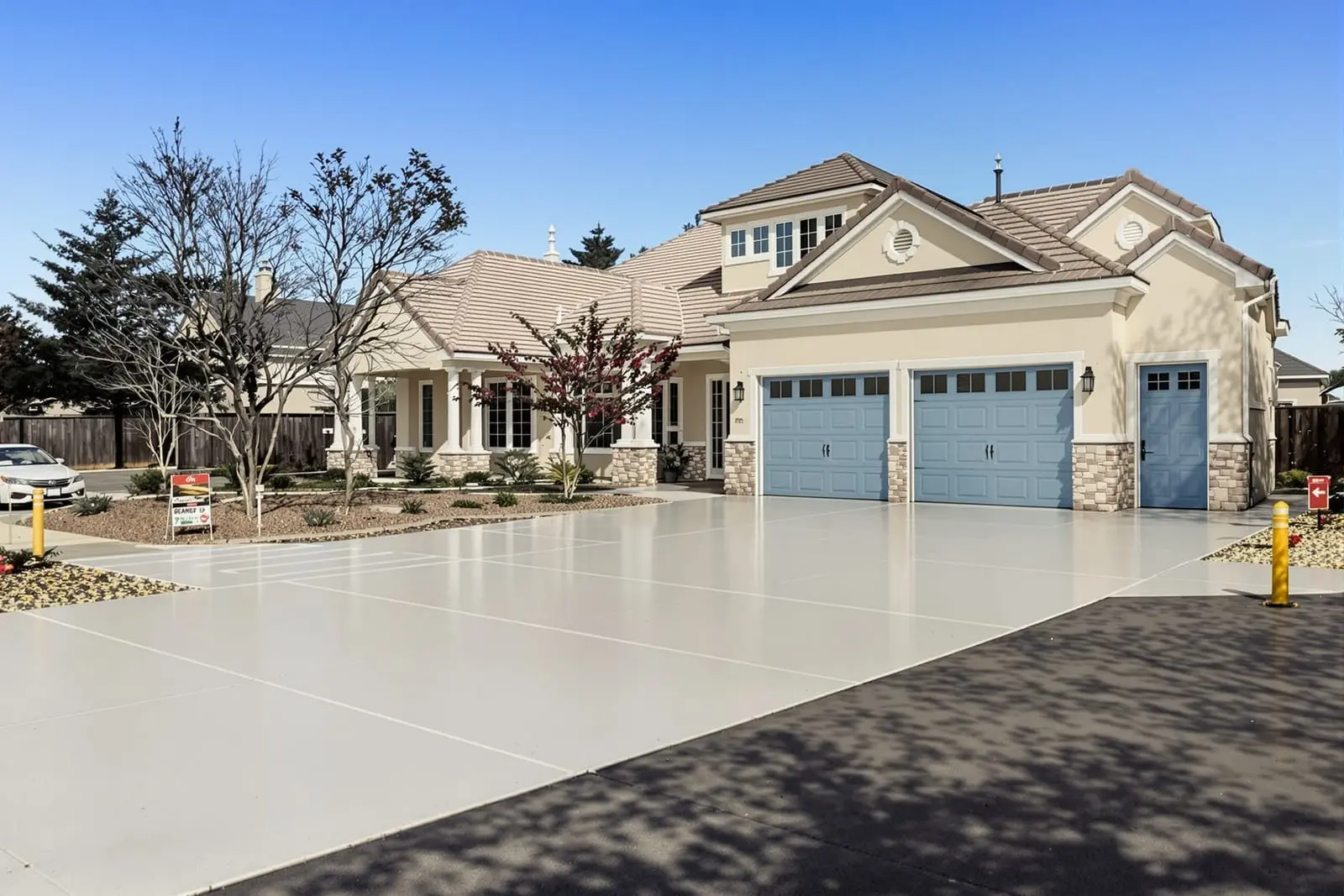
Support your business traffic with reliable commercial concrete paving in San Antonio, TX. We install heavy duty flatwork for access drives, loading areas, and parking spaces using proper thickness and reinforcement. Our crew manages layout, grading, and traffic control so your project stays on schedule and built to spec.
Brava Concrete San Antonio provides professional commercial concrete paving throughout San Antonio, TX and the surrounding area. Our licensed, insured crew delivers safe, clean, on-time work with a free estimate before anything begins. Call (830) 429-4681 or request your free quote.
Commercial Concrete Paving for San Antonio Businesses
Commercial concrete paving is not just a surface. It is the structure that carries your customers, delivery trucks, employees, and emergency vehicles every day. Brava Concrete San Antonio focuses on building pavements that perform in real San Antonio conditions, from summer heat and sudden downpours to long-term traffic wear.
We work with property managers, general contractors, and business owners across the San Antonio area to design and install commercial concrete paving that actually fits how your site is used. That might mean a thicker section and higher-strength mix in loading zones, smoother finishes and striping layout for retail parking, or durable access drives around an industrial facility. Every project starts with a walkthrough of your property so we can see traffic patterns, drainage issues, and any existing failures before we design a solution.
Because we specialize in commercial sites, we understand priorities like safety, liability, and downtime. Brava Concrete San Antonio plans each stage of your concrete paving so you can keep operations moving, whether that means phasing work around business hours, keeping fire lanes accessible, or coordinating with your other trades on a ground-up build.
How Our Commercial Concrete Paving Process Works
A reliable commercial pavement comes from a disciplined process. When Brava Concrete San Antonio installs commercial concrete paving, we follow a sequence that keeps surprises and change orders to a minimum.
1) Site evaluation and layout: We start by measuring your existing pavement or planned footprint, checking subgrade conditions, and identifying drainage paths, utilities, and access points. We discuss your vehicle loads, traffic volume, and any problem areas like ponding water or recurring cracks.
2) Engineering and pavement section: Based on what we find, we recommend slab thickness, concrete strength (often 4000 to 5000 psi for commercial applications), reinforcement (rebar, welded wire mesh, or fiber), and joint spacing. For heavy truck routes or dumpster pads, we may increase thickness and tighten joint spacing to handle repeated loading.
3) Subgrade prep and base: We strip failing asphalt or weak soils as needed, then grade and compact the subgrade. In San Antonio, many lots are on clay soils that move with moisture. To control that, we often install a compacted base of crushed limestone or flex base to stabilize the surface and improve drainage.
4) Forms, reinforcement, and joints: We set forms to the correct elevations and slopes for drainage toward inlets or swales. Next we place reinforcement where specified and lay out joint locations so they fall in logical lines for striping, islands, and curbs. Planned joints help control where shrinkage cracks form.
5) Concrete placement and finishing: We place commercial-grade ready-mix concrete, consolidate it to remove air pockets, and screed it to elevation. For most lots we use a broom finish for traction, then tool joints and edges. In drive lanes and loading areas, we may use a slightly rougher broom to prevent skidding, especially when surfaces are wet.
6) Curing, cuts, and cleanup: Proper curing is critical in our hot climate. We apply curing compound or use other curing methods to help the slab gain strength evenly. We saw contraction joints at the right time to minimize random cracking, then return to remove forms, backfill edges, and prep for striping and signage.
San Antonio Climate, Scheduling, and Durability Considerations
Commercial concrete paving in San Antonio has to be planned around heat, sudden storms, and clay-rich soils. Brava Concrete San Antonio schedules pours to avoid the worst heat of the day when possible, which helps control rapid moisture loss and surface cracking. In summer, early morning or evening placements are often best for large lots.
The combination of heat and occasional freezing nights means your pavement needs the right mix design and curing practices. We work with local ready-mix suppliers who understand regional conditions and can adjust water-cement ratios, admixtures, and set times so your concrete reaches strength without surface defects. For areas exposed to frequent ponding or chemical exposure, like loading docks or trash enclosures, we can specify mixes with lower permeability and suitable air content.
Drainage is another major factor. Brief but intense storms in San Antonio can flood poorly sloped pavements. During design, we look closely at slopes, gutter lines, and inlet locations so water leaves the surface quickly instead of sitting in ruts where it can seep into joints and undermine the base. When needed, we integrate concrete valley gutters, transition slabs to existing inlets, or regrade problem spots as part of the paving scope.
Because our local soils expand and contract with moisture swings, we pay attention to subgrade moisture conditioning and joint layout. That might mean proof-rolling and recompacting soft areas, replacing unstable patches with base material, and using dowel baskets at key joints to transfer loads between slabs and reduce differential settlement in drive lanes.
Design Options for Commercial Concrete Paving
Concrete does not have to look plain or industrial. Many San Antonio properties use commercial concrete paving as part of their curb appeal, especially at entrances and pedestrian zones. Brava Concrete San Antonio can keep heavy-duty performance where you need it and upgrade appearance where it matters to customers.
Finish options include standard broom, light broom for easier sweeping, and trowel plus broom combinations for smoother main walks with traction. At storefronts and courtyards, we can integrate decorative bands, saw-cut patterns, or colored concrete to visually separate pedestrian paths from vehicle areas.
We also coordinate concrete paving with curbs, ramps, and ADA-compliant access. That includes correctly sloped curb ramps, detectable warning panels at crosswalks, and smooth transitions between parking stalls and sidewalks to avoid trip hazards. The goal is to make your property safer and easier to navigate while staying compliant with accessibility standards.
For industrial or fleet properties, design might focus more on operational efficiency than aesthetics. In those cases, we look at turning radii for trucks, trailer tracking paths, and space for dock approach so the slab layout works with your actual vehicle movements. Thickened edge beams at dock faces or dumpster pads can be used to resist chipping from repeated impact.
Cost Drivers, Common Issues, and How We Solve Them
Commercial concrete paving is a significant investment, and understanding cost drivers helps you budget and compare proposals clearly. At Brava Concrete San Antonio, the main factors that affect price are total square footage, required thickness and strength, base preparation needs, access and phasing complexity, and any decorative or ADA-specific details.
Thickness and base prep make some of the biggest differences. A 4 inch parking stall area will cost less than a 6 or 7 inch loading lane that also needs undercutting and extra base rock. Properties with poor drainage or unstable soils may require more excavation and base material, but that upfront cost can prevent future slab failure and repeated patching.
Common problems on existing commercial pavements in San Antonio include alligator cracking from overloaded or thin sections, slab settlement near dumpsters or at truck loading zones, joint spalling from poor load transfer, and surface scaling where curing was inadequate. When we are replacing or expanding existing pavement, we study these failures and adjust the new design so you do not repeat the same issues.
Our solutions might include thicker sections in critical areas, better joint detailing with dowels, improving drainage, or isolating slabs from structures or utility trenches with proper joint materials. Where your operations cannot shut down, we phase work so one access drive or loading lane stays open while another is being reconstructed, and we clearly mark curing areas so vehicles stay off until the concrete reaches suitable strength.
Why Work With Brava Concrete San Antonio and How to Get Started
Choosing the right contractor for commercial concrete paving is as important as the design itself. Brava Concrete San Antonio focuses on commercial work, so our crews are used to working around active businesses, coordinating with general contractors, and meeting project schedules. Our detailed proposals spell out slab thicknesses, reinforcement, base depth, and joint layout so you know exactly what you are buying.
We are familiar with local inspection requirements, from city of San Antonio standards to typical specs used by area engineers and commercial developers. We can work from your engineered plans or help you develop a practical section when formal plans are not required. Throughout the project, you get a clear point of contact who keeps you updated on pour dates, closures, and reopening times.
To get started, we typically schedule a site visit to walk the property, discuss your traffic patterns and long-term plans, and evaluate any existing pavement. From there we provide a written scope and pricing for your commercial concrete paving, including any recommended phasing to minimize disruption. Whether you are planning a new development, rebuilding a tired parking lot, or adding heavy-duty truck access, Brava Concrete San Antonio is ready to help you create a pavement that supports your business for years.
“
Professional commercial concrete paving, done right the first time, quality materials, honest pricing, and results that last.
Brava Concrete San Antonio
Commercial Concrete Paving Across Our Service Area