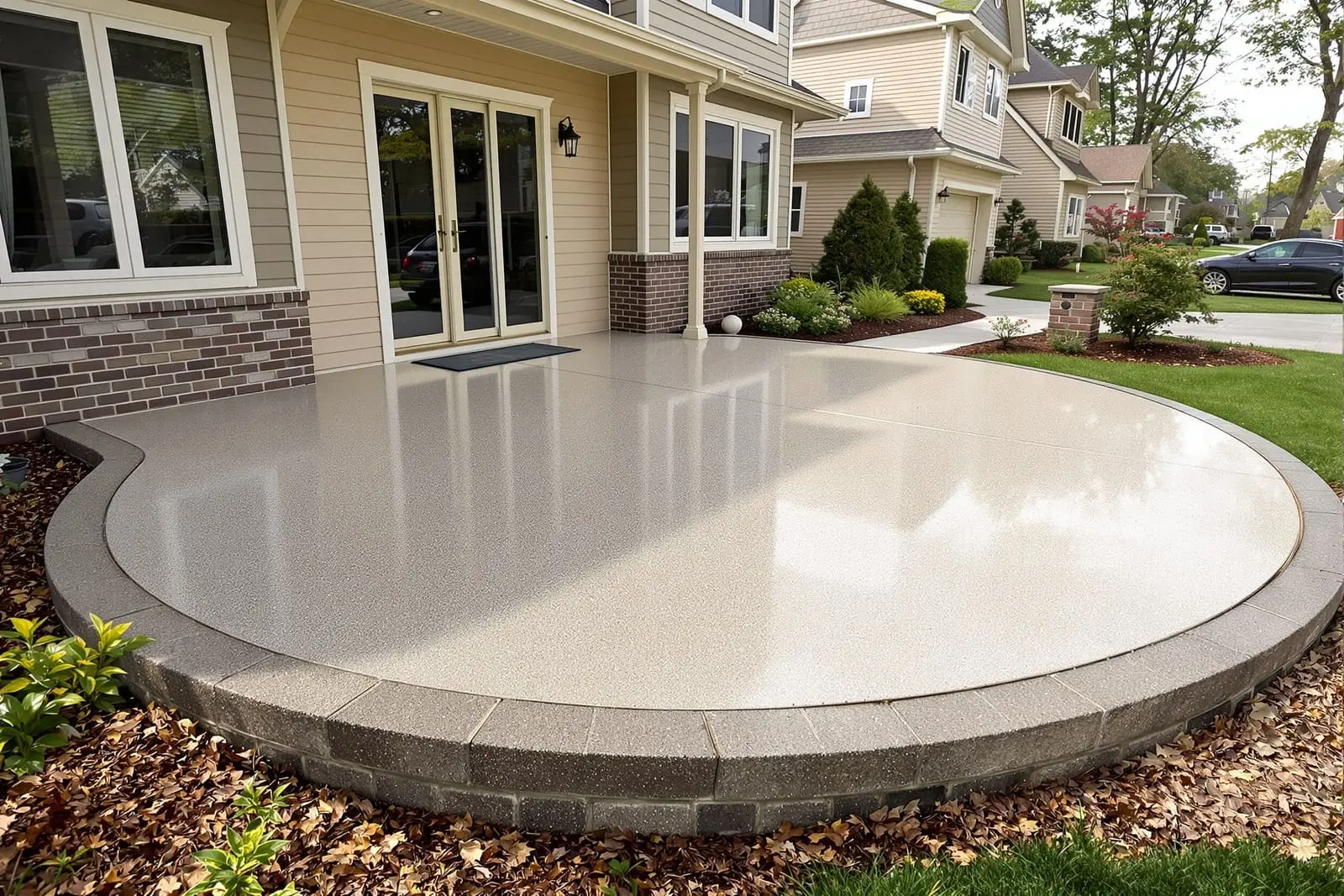
Create an outdoor living area with our concrete patio installation in San Antonio, TX. We pour custom patio slabs sized to your yard, with options for broom, smooth, or decorative finishes. From simple grilling pads to multi level patio construction, we build durable spaces your family can enjoy for years.
Brava Concrete San Antonio provides professional concrete patio installation throughout San Antonio, TX and the surrounding area. Our licensed, insured crew delivers safe, clean, on-time work with a free estimate before anything begins. Call (830) 429-4681 or request your free quote.
Concrete patios tailored to San Antonio backyards
Brava Concrete San Antonio focuses on concrete patio installation that actually fits how people here use their backyards: grilling, family gatherings, and shade hunting in the afternoon heat. We start by walking your property with you, looking at sun angles, existing trees, how water drains after a storm, and how you move between the house, yard, and any existing decks or walkways. For many San Antonio homes, the best patio placement is off the back door or sliding door, but on some older bungalows near downtown, side yards or courtyard layouts make more sense.
During this visit we measure existing concrete, check for low spots that hold water, note sprinkler lines, and look for utility access like cleanouts and AC pads. In neighborhoods with smaller lots, like many on the Northwest Side, we pay close attention to property lines and HOA rules about patio size and finishes. Our goal is to design a concrete patio that looks intentional with your home, not like a slab that was added as an afterthought.
Because we are local, we also think about shade structures and future add ons. If you plan to add a pergola or patio cover later, we can thicken and reinforce specific areas of the slab now so it is ready for posts or masonry columns. That kind of planning saves you money and avoids messy retrofits later.
How our concrete patio installation process actually works
A successful concrete patio installation starts with what you do before the truck ever arrives. After finalizing your layout, thickness, and finish, Brava Concrete San Antonio calls in utility locates as needed and confirms HOA requirements or any needed city permits for larger structures that tie into the patio. On installation day, we begin with layout and excavation. We remove grass, old concrete, and topsoil, then cut or saw old slabs cleanly if we are tying into an existing porch. Typical patio depth is 4 inches, but for areas that will support heavy outdoor kitchens or hot tubs, we recommend 5 to 6 inches.
Next we prepare the base. San Antonio soils can range from expansive clay on the West and South sides to rockier ground toward Stone Oak and the Hill Country. Where clay is present, a compacted base of road base or crushed limestone is essential. We spread it in thin layers, then compact thoroughly with plate tampers so the patio will not settle or crack at the edges.
We then build forms from straight lumber, checking elevation with a level or laser. We set slopes carefully, usually about 1/8 inch per foot away from the house, so water moves off the surface but you do not feel like you are standing on a ramp. After forming, we place reinforcement. Depending on your project and soil conditions, this may be welded wire mesh, #3 or #4 rebar on a grid, or a combination. Corners, edges where people step, and areas near doors get special attention because they see more stress.
Only after all that preparation do we schedule the ready mix truck. We typically use a 3,000 to 3,500 psi concrete mix for patios, sometimes higher strength where heavy loads are expected. We add fiber reinforcement if you request it, and we control water content carefully. Too much water might make placing easier for a short time, but it weakens the slab and makes finishing problems more likely, especially in hot San Antonio weather.
Finishes, colors, and design options for your patio
Concrete patio installation does not have to mean a plain gray rectangle. Brava Concrete San Antonio offers several finish styles that work well with local homes, from 1950s ranch houses to newer stucco builds.
A standard broom finish is cost effective and practical. We apply a uniform texture with a broom after bull floating and troweling. This adds slip resistance, which is especially important around pools or where kids run with wet feet. For a smoother look that still has traction, we can vary the broom angle or use a light swirl finish.
If you want a more decorative patio, integral color and stains are popular in San Antonio. Integral color is added at the concrete plant so the slab is colored all the way through. Topical stains and dyes are applied after the concrete has cured and can give earth tones, terracotta shades, or richer colors that complement stone or brick. We always test stain colors on a small inconspicuous area or sample before committing to the full patio.
Stamped concrete is another option. We press patterns into the surface while the concrete is still workable, then use release agents and coloring to mimic flagstone, slate, or pavers. On many North Side homes, a flagstone pattern in warm browns blends well with stone facades. For smaller patios in older neighborhoods, a subtle textured pattern can add interest without looking out of place. We also cut control joints in a layout that lines up with doors, windows, and landscape features so they look intentional instead of random.
Edge details matter too. We can bevel or round the patio edges to reduce chipping, or form a small step down to the yard with a textured face that matches any existing steps or walkways. If you already have a concrete walk or driveway, we can echo that finish so everything looks unified.
Dealing with San Antonio heat, rain, and soil movement
San Antonio weather is tough on concrete. High heat, sudden thunderstorms, and clay soils that swell and shrink can all shorten the life of a poorly built patio. Brava Concrete San Antonio plans each concrete patio installation with these local conditions in mind.
Heat affects both placement and curing. In summer, we often start pours early in the morning before the concrete sets too quickly. We may use set control admixtures to slow the reaction when temperatures are high. Our crew keeps the surface from drying out too fast while we finish, because rapid moisture loss can cause surface checking and weak top layers.
Drainage is another big issue. Patios that are too flat or sloped the wrong way can send water toward your foundation. We look at your existing gutters, downspouts, and low spots in the yard. Sometimes we build in trenches or leave allowances for future drains at the patio edge so water has a clear path away from your home. On sloped lots, common on the North and Northwest sides, we might terrace the patio into two levels or incorporate a small step to handle grade changes safely.
For soil movement, reinforcement and base preparation are your main defenses. On properties with noticeable cracking in existing driveways or sidewalks, we may suggest thicker edges, tighter rebar spacing, or additional control joints. These joints are cut to encourage the slab to crack in straight, hidden lines instead of randomly across the surface. They are not a flaw, they are a planned stress relief that keeps the patio looking good longer.
Finally, we recommend sealing. A good penetrating or film forming sealer helps resist moisture, stains from grills and tables, and sun fading. In high traffic patios, especially those used for cooking or near pools, resealing every few years keeps the surface easier to clean and slows wear.
Costs, estimates, and what affects your patio price
Homeowners often ask why one concrete patio installation quote is higher or lower than another. Brava Concrete San Antonio is straightforward about the factors that affect price so you can compare bids honestly.
Size and thickness come first. A small, basic 4 inch thick patio off a back door will cost less per square foot than a complex multi level design. Increasing thickness where you want to place a hot tub or large outdoor kitchen increases both concrete and labor costs, but avoids future failure under heavy loads.
Access plays a big role in San Antonio neighborhoods where lots are tight. If we can back a truck close to the patio area, costs stay down. If we have to wheelbarrow or pump concrete through narrow side yards or around obstacles, additional labor or pump truck fees apply. Removing and hauling away old concrete or big tree roots also adds cost, but skipping that step often leads to future cracking or uneven slabs.
Finish type is another big driver. A simple broom finish uses less labor and materials than stamped or stained concrete. Stamped patios require color hardeners, release agents, and additional finishing time, plus more careful joint planning. Custom borders, saw cuts, and inlay designs all add craftsmanship and time, which shows in the final product.
Finally, unseen details like reinforcement and base prep can make one quote look higher upfront while actually saving you money later. We always specify what reinforcement we are including, what base material we are using, and how thick each layer will be. When you compare estimates, look for those details, not just a square foot price. A low number without clear specs can mean corners are being cut where you cannot see them.
Common patio problems and how we prevent them
Many of the calls Brava Concrete San Antonio receives are from homeowners frustrated with an existing patio that cracked badly or holds water. Understanding these problems helps you ask better questions before your new concrete patio installation.
Random cracking is usually caused by poor base compaction, missing or minimal reinforcement, or improperly placed control joints. We reduce this risk by compacting the base thoroughly, using the right reinforcement pattern for your soil and load, and cutting joints at proper spacing and depth. In most residential patios this means joints every 8 to 12 feet in both directions, laid out to align with doors or walls so they are less noticeable.
Standing water on the patio or against the house is another frequent issue. Sometimes the patio was poured flat, or it settled because the soil underneath was not compacted. We prevent this by setting laser elevations before the pour and checking slope repeatedly as we finish the concrete. Where yard drainage is already poor, we may recommend a shallow swale or drain line at the patio edge so runoff has somewhere to go.
Flaking or peeling surfaces, particularly where de icing salts or harsh cleaners were used, are often due to improper finishing or curing. Working the surface too much or finishing while bleed water is still present weakens the top layer. Our crews watch for bleed water, finish in the correct stages, and then cure properly. Curing can involve keeping the slab moist for several days, using curing compounds, or covering with curing blankets depending on temperature and wind.
Color inconsistencies on decorative patios are usually the result of uneven application of stains or sealers, or differences in how the concrete dried in sun and shade. We take time to prep and clean the surface before staining, apply colors in planned passes, and explain how lighting will affect the final look. On integral color jobs, we confirm that the same mix and batch proportions are used for the entire project.
What to expect when you work with Brava Concrete San Antonio
Choosing a contractor for concrete patio installation is as important as choosing the right design. Our process is built around clear communication and respect for your property.
First, we schedule an on site visit, not just a phone quote based on rough measurements. At the visit we take elevations, inspect your existing concrete and soils, discuss your use of the space, and show you finish options with real samples. We then send a written proposal that lists thickness, reinforcement, base material, finish type, and any decorative work so you know exactly what is included.
Once you approve, we set a tentative date and keep you updated about weather and concrete plant scheduling. On the day of the pour, our crew protects nearby landscaping as much as practical and keeps walkways safe and clear. After the patio is placed and finished, we barricade the area and provide written care instructions. This typically includes when you can walk on the surface, when furniture and grills can go back, and how long to wait before placing heavy items.
We also review simple maintenance steps so your patio looks good for years. Cleaning with a mild detergent and low pressure water, resealing decorative finishes on a schedule, and avoiding harsh chemicals or metal shovels all help. If you ever see unusual cracking, settlement, or drainage issues, we want to hear from you so we can assess the problem and recommend solutions.
Because we live and work in San Antonio, our reputation is built in the same neighborhoods where you live. Brava Concrete San Antonio approaches every patio as a long term improvement to a local home, not just a quick pour. When you are ready to plan your patio, we are ready to walk the yard with you and design something that fits both your budget and the way your family actually uses the space.
“
Professional concrete patio installation, done right the first time, quality materials, honest pricing, and results that last.
Brava Concrete San Antonio
Concrete Patio Installation Across Our Service Area