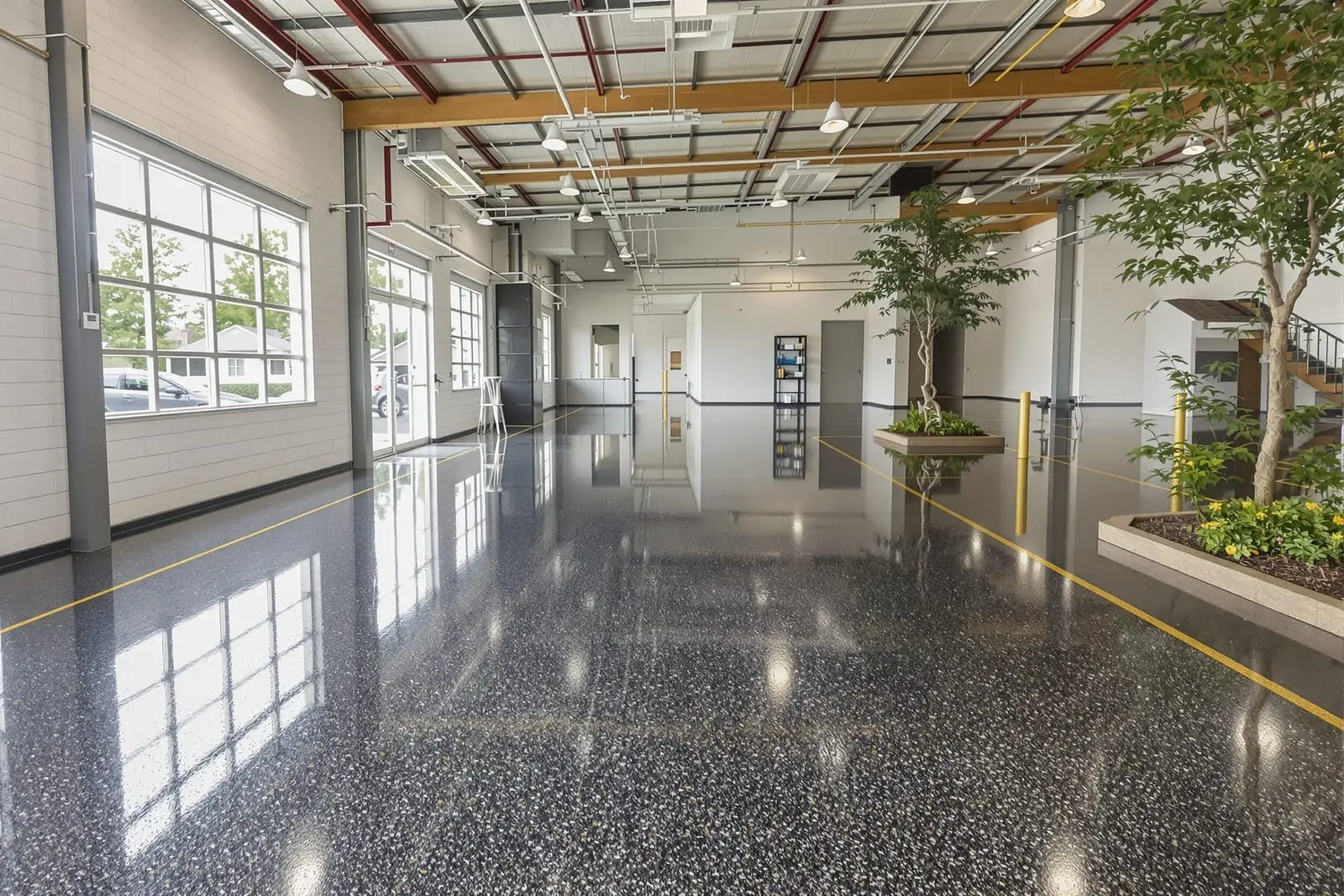
Support heavy loads and machinery with properly designed industrial concrete floors in San Antonio, TX. We pour warehouse slabs with correct thickness, reinforcement, and surface hardness for forklifts and racking systems. Our team delivers flat, level floors that minimize joints and resist wear in demanding environments.
Brava Concrete San Antonio provides professional industrial concrete floors throughout San Antonio, TX and the surrounding area. Our licensed, insured crew delivers safe, clean, on-time work with a free estimate before anything begins. Call (830) 429-4681 or request your free quote.
Warehouse & Industrial Concrete Floors in San Antonio
Industrial concrete floors are the working surface of your operation, not a cosmetic upgrade. At Brava Concrete San Antonio, we design and install floors that handle forklift traffic, pallet racks, heavy equipment, and constant cleaning without curling, spalling, or turning into a maintenance headache.
In the San Antonio area, most warehouses and industrial sites sit on expansive clay soils and see constant temperature swings. That combination can punish a poorly designed floor. Our team accounts for soil conditions, expected loads, and how your space is actually used, then engineers a slab and reinforcement system that holds up over time.
Whether you are building a new distribution center off I‑10, expanding a fabrication shop on the South Side, or upgrading an older warehouse near downtown, Brava Concrete San Antonio focuses on what matters to facility managers: flatness for safe racking and forklifts, joint layouts that reduce impact and trip hazards, surface hardness that resists abrasion, and mix designs that balance budget with performance.
How We Design Industrial Concrete Floors That Work
Before any concrete is ordered, we go through a detailed planning and design process so your industrial floor does what you need it to do.
We start with use profiling. We confirm your racking layout, aisle widths, lift truck types, wheel types, typical axle loads, and whether you plan narrow-aisle or high-bay storage. A floor designed for light pallet jacks is very different from one that must support heavy reach trucks and 40-foot racks.
Next we address subgrade and base. In San Antonio, native soils often need improvement. We evaluate existing soil compaction, moisture, and any previous fill material. When needed, we specify lime or cement treatment or import select fill, then compact it in lifts. Over that we install a graded aggregate base, usually 4 to 6 inches of crushed limestone or similar, to provide a stable, level platform and promote drainage.
Then we design the slab thickness and reinforcement. Typical warehouse slabs range from 5 to 8 inches for general storage, though heavier manufacturing or rack-supported mezzanines may require more. We use a combination of rebar, welded wire mesh, or macro synthetic fibers depending on the application. For many San Antonio warehouses, a 6 inch slab with a tailored fiber dose and doweled joints offers a strong balance of performance and cost.
We also plan your joint spacing and layout around the building column grid, rack rows, and door openings. Proper joint design is one of the biggest factors in floor durability and forklift comfort. Brava Concrete San Antonio pays close attention to this early so the finished floor fits your equipment and workflow instead of fighting it.
Installation Process, Step by Step
On installation day, our crews follow a consistent sequence that is tuned for industrial projects where schedule, cleanliness, and precision matter.
1) Subgrade prep and proof-rolling. We verify compaction with testing and proof-roll with loaded trucks or equipment. Soft spots are corrected before any base material goes in.
2) Base placement. We place and laser-grade your aggregate base to tight tolerances, then compact to project specifications. For interior work in existing buildings, we manage dust and access carefully so operations can continue in other areas when possible.
3) Vapor barrier and reinforcement. Where moisture control is needed, such as warehouses with sensitive inventory, we install a vapor retarder beneath the slab, taped and protected from punctures. Reinforcement is placed on chairs so it remains in the correct position when concrete is poured, not sitting on the base.
4) Concrete placement and finishing. We typically use laser screeds for large warehouse and industrial concrete floors in San Antonio to achieve consistent thickness and flatness. As the slab sets, we use ride-on trowels to develop a dense, hard surface, adjusting timing to local temperature and wind conditions so the surface does not crust or check.
5) Joint cutting and curing. Control joints are cut at the correct depth and spacing, usually within 4 to 18 hours depending on conditions and mix. We apply curing compounds or use curing blankets or plastic sheeting as required by the specification to slow moisture loss and reduce cracking.
6) Cleanup and protection. Once the slab can handle light traffic, we remove debris, mark new joints, and provide guidelines for when forklifts, racks, and heavy loads can be placed.
Material Options and Surface Treatments for Industrial Use
Your industrial floor can be customized based on what you store, manufacture, or process.
For heavy wear, we often incorporate surface hardeners during troweling or use aggregates and mix designs built for high abrasion resistance. Facilities with constant steel-wheeled cart traffic or heavy point loads benefit from these upgrades.
If chemical exposure is an issue, such as in food processing, automotive, or distribution centers handling oils and solvents, we pair the structural slab with a compatible coating system. This may be a high-build epoxy, urethane, or other resin system applied after proper surface prep and curing. Brava Concrete San Antonio coordinates with coating installers so the base concrete finish and joint layout are appropriate for their products.
For operations that need very flat floors, like high-bay narrow-aisle racking with wire-guided trucks, we can target higher F-number flatness and levelness. This requires more detailed placement methods, intermediate checks during finishing, and strict control of mix consistency and set times.
We also address slip resistance. In wet or wash-down areas we adjust finishing techniques and, if needed, add texture to reduce slip while still allowing easy cleaning with scrubbers. For areas that require dust control, we specify mix designs and curing practices that reduce surface dusting and help coatings adhere.
Cost Drivers for Warehouse & Industrial Concrete Floors
Brava Concrete San Antonio is straightforward about what drives the price of industrial concrete floors so you can budget accurately and compare bids fairly.
Key cost factors include slab thickness and size, reinforcement type and quantity, and the strength and special properties of the concrete mix. A basic 6 inch slab with standard reinforcement will cost less per square foot than a 9 inch heavily reinforced slab designed for high-impact loading or rack-supported structures.
Existing site conditions in San Antonio can be a major variable. Poor soils, removal of old slabs, or limited access inside existing buildings can add labor and material. If we discover undocumented debris or uncontrolled fill beneath an older warehouse floor, extra excavation and base work may be needed to prevent future settlement.
Specification requirements also affect cost: tighter flatness tolerances, high F-number floors, special curing methods, or coordination with other trades for embedded items such as drains, anchor bolts, or machine foundations all require more labor and supervision.
Schedule is another factor. Night work, phased construction to keep your facility partially operational, or accelerated timelines that require larger crews and more equipment can increase costs, but they may save you downtime. We walk you through these options so you can balance construction expense against operational impact.
Common Problems and How We Prevent Them
Many industrial property owners in San Antonio have experienced floors that look fine at first, then fail under real use. We design and build specifically to avoid those problems.
Cracking and curling at joints are some of the biggest complaints. We address these with proper joint spacing, correct slab thickness, balanced reinforcement, and mixes tailored for local climate. We also control curing so the top and bottom of the slab dry more evenly, which reduces curling.
Joint deterioration under forklift traffic is another common issue. Brava Concrete San Antonio uses armored or keyed joint systems where appropriate, and we ensure dowels are installed correctly so the slab edges share loads. This greatly reduces spalling and the “speed bump” effect at joints.
Moisture issues in older San Antonio warehouses often show up as bubbles or peeling in floor coatings or adhesives. For new floors, we design moisture mitigation strategies such as vapor retarders, proper curing, and realistic timelines before installing sensitive finishes. For replacement slabs, we can test moisture levels and specify appropriate systems to avoid the same failures.
We also plan for repairs and future modifications. Access to reinforcement details, joint layouts, and thickness maps allows you or future contractors to safely cut trenches for utilities or install new equipment pads without unexpected damage.
What to Expect When You Hire Brava Concrete San Antonio
From the first site visit to the final walkthrough, our goal is to deliver an industrial concrete floor that supports your operation for decades, not just until the warranty runs out.
We start with a consultation where we walk the site, review your layouts or building plans, and ask detailed questions about your current and future usage. For existing San Antonio warehouses, we often perform slab coring or non-destructive testing to understand what is already in place before proposing full replacement or partial upgrades.
You receive a clear scope that includes slab thickness, reinforcement type, joint layout concepts, and any special flatness, levelness, or coating requirements. During construction, you get a single point of contact who coordinates with your GC, racking installers, electricians, and other trades so sleeves, conduits, and anchor bolts end up in the right locations.
After placement, we walk the project with you to verify flatness, joint quality, and surface finish. We also provide guidance on early use, cleaning methods, and when it is safe to bring in racks and forklifts. If you plan phased expansions or additional buildings around San Antonio, we can keep design standards consistent so your facilities operate the same way across locations.
“
Professional warehouse & industrial concrete floors, done right the first time, quality materials, honest pricing, and results that last.
Brava Concrete San Antonio
Warehouse & Industrial Concrete Floors Across Our Service Area