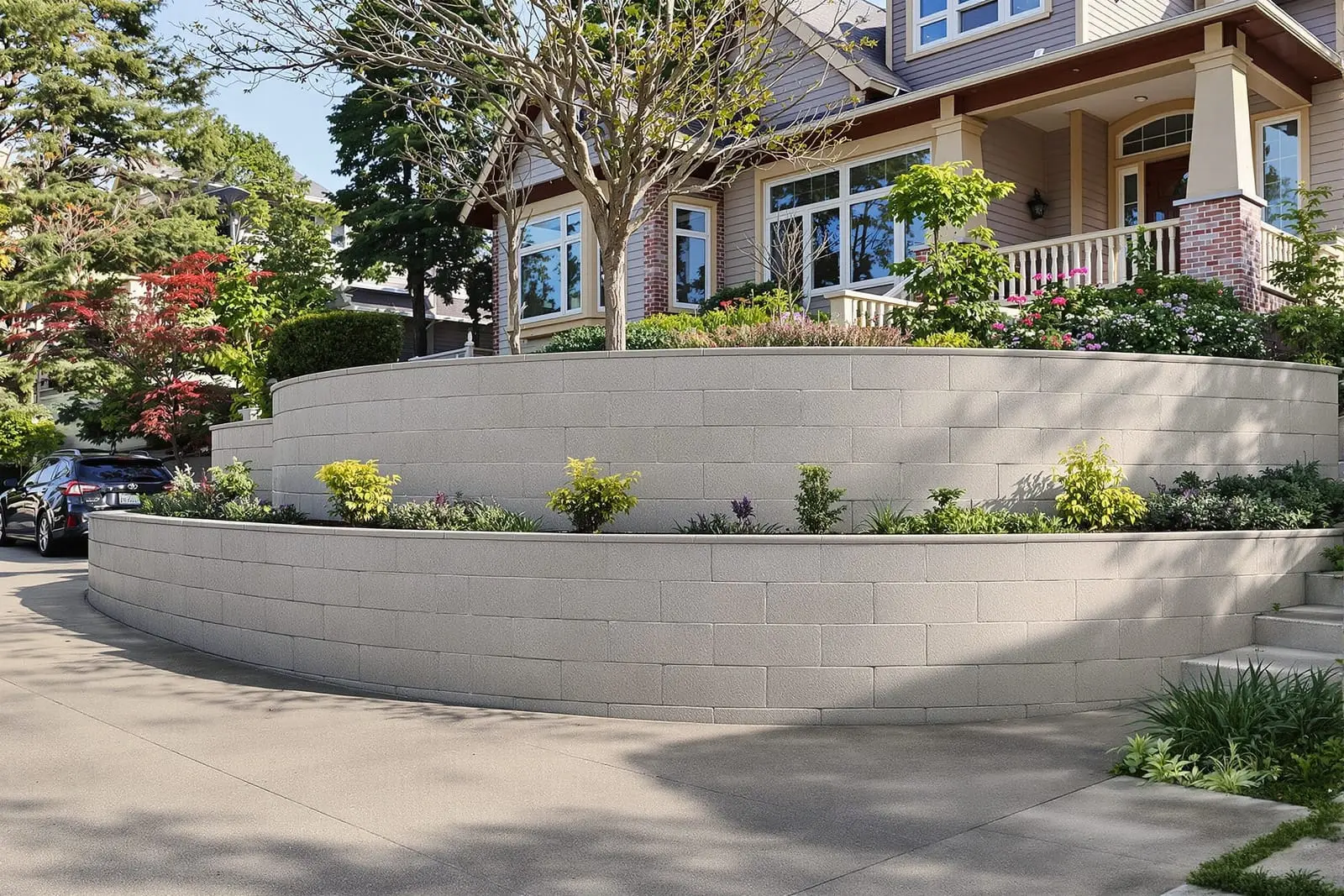
Control slopes and erosion with a solid concrete retaining wall in San Antonio, TX. We design and pour retaining walls with proper reinforcement, drainage, and footing depth for your site. Whether you need a low garden wall or a tall structural barrier, we create poured concrete wall systems that are strong and long lasting.
Brava Concrete San Antonio provides professional concrete retaining wall throughout San Antonio, TX and the surrounding area. Our licensed, insured crew delivers safe, clean, on-time work with a free estimate before anything begins. Call (830) 429-4681 or request your free quote.
Practical Concrete Retaining Walls for San Antonio Yards and Businesses
A concrete retaining wall is more than a border around your property. In San Antonio, it is often the difference between a stable yard and a shifting slope that keeps washing out every storm. At Brava Concrete San Antonio, we design and build retaining walls that handle local soil conditions, heavy summer rains, and the long dry spells that cause ground movement.
We work on hillsides in places like Alamo Heights, Helotes, and the Northside where properties have real elevation changes, not just a gentle slope. A proper wall keeps soil where it belongs, protects foundations and driveways, and can also create flat, usable space for patios, parking, or play areas. Concrete is usually the best choice here because it resists rot, insects, and the intense Texas sun much better than timber.
When you contact Brava Concrete San Antonio, our first step is a site visit. We look at slope, drainage paths, existing structures, and how you use the space today. We also ask about any past erosion issues or previous walls that have failed. From there, we explain what type of retaining wall makes sense for your property, what height is safe, and whether you will need city permits or an engineer’s stamp based on the wall size and location.
Types of Concrete Retaining Walls We Build
Most San Antonio homeowners hear “retaining wall” and think of one type of structure. In reality, there are several approaches, and choosing the right one matters. Brava Concrete San Antonio typically builds three main styles, depending on height, soil, and access.
Poured in place concrete walls are the most solid option. We build forms on site, install rebar, and pour concrete as a single structure. This type works well for taller walls, tight spaces, and when you want a smooth or decorative finish. It is ideal near driveways, garages, or patios where you want a clean, finished look.
Segmental block concrete walls use engineered concrete blocks that lock together. These are common in subdivisions across San Antonio because they look neat, are easier to repair in sections, and can follow curves. Although some small versions are sold as DIY systems, the walls we build include proper base prep, drainage, and sometimes geogrid reinforcement inside the soil for added stability.
Concrete masonry unit (CMU) walls with a concrete footing are a hybrid approach. We set a reinforced footing, stack CMU blocks, add rebar inside, and fill the cores with concrete. This style is good when you want a stucco or stone veneer finish on the visible side, such as in HOA neighborhoods that restrict the look of plain block.
During planning we explain which wall type matches your property, budget, and any HOA style rules. That way you understand not just how the wall will look, but how it will actually work to hold the soil in place.
How We Build a Reliable Concrete Retaining Wall
A strong retaining wall starts below the ground. At Brava Concrete San Antonio, we focus on what you will never see once the wall is finished, because that is where most failures begin.
First, we mark utilities and property lines, then strip vegetation and organic soil from the work area. We excavate for both the wall footing and the drainage zone behind the wall. In San Antonio, this often means dealing with caliche or rock. We use equipment sized for the site so we can work in tight side yards without tearing up the whole property.
Next comes the base. We install a compacted layer of crushed stone or road base, not just dirt. This base is leveled and compacted in thin lifts, which keeps the wall from sinking or tilting later. For poured concrete and CMU walls, we form and pour a reinforced footing that spreads out the load.
Reinforcement is critical. We place rebar according to the wall height and soil conditions, spacing it and tying it off so it cannot shift during the pour. For taller segmental walls, we also use geogrid layers that run back into the soil behind the wall. This turns the soil and wall into one combined structure, which is especially important on steeper San Antonio lots.
Drainage is the other key piece. Every retaining wall we build includes a drainage layer of clean gravel behind the wall, along with a perforated drain pipe (French drain style) at the base. The pipe is wrapped in fabric and sloped to daylight or tied into an existing drain system. This keeps water pressure from building up behind the wall, which is one of the main reasons walls fail in our heavy summer storms.
Finally, we pour or stack the wall itself, checking for level, plumb, and alignment as we go. For poured walls, we vibrate the concrete to reduce voids, then strip forms at the right time and begin any surface finishing or coating. For block walls, we backfill in stages, compact carefully, and install caps for a clean finish.
Local Codes, Permits, and HOA Rules in San Antonio
Retaining walls are not just a landscaping feature; in many cases, the City of San Antonio treats them as structures that must meet specific standards. Brava Concrete San Antonio helps you navigate local rules so you do not run into problems later when you sell or when a neighbor complains.
In general, smaller landscape walls under a certain height may not need a permit, but walls over that height, or any wall that supports a driveway, parking area, or structure, often do. The exact requirement can depend on height, location on the lot, whether it is tiered, and how close it is to a fence or property line. Some projects also need an engineer’s design when there is a risk to nearby buildings or public sidewalks.
We talk through these details early and, if needed, coordinate with a local structural engineer familiar with San Antonio clay soils and rock. If permits are required, we can assist with documentation, drawings, and scheduling inspections. Building to code adds a bit of time, but it also protects you from future issues with the city or your insurance.
If you live in an HOA neighborhood in areas like Stone Oak, Alamo Ranch, or The Dominion, there may be additional requirements about height, materials, or visible surfaces. Many HOAs do not want plain gray block facing the street and may require a stucco, stone, or textured finish. We help you match or complement existing walls in the subdivision and can provide material samples or photos for your HOA approval package.
By dealing with codes and rules up front, we avoid situations where a finished wall needs to be modified or, in the worst case, torn down because it was not approved.
Cost, Lifespan, and What To Ask Before You Hire
Concrete retaining wall costs in San Antonio vary widely, and it helps to know what drives the price. Height is the biggest factor, because taller walls need deeper excavation, more concrete, more steel, and often engineering. Access is next. If the crew can reach the area with equipment, costs are lower than when everything has to be carried through a side gate by hand. Soil type, rock, the need for haul off, and drainage tie-ins also affect the final number.
As a rough idea, a simple low concrete block retaining wall along a driveway is far less expensive than a tall, engineered poured wall holding up a backyard on a steep hill. Decorative finishes such as stamped patterns, colored concrete, or stone veneer add to the cost, but they can be worth it in front yards or visible outdoor living spaces.
When you talk with Brava Concrete San Antonio, we provide a clear breakdown: excavation, base and drainage, wall structure, finish, and cleanup. This helps you see where your money is going and what could be adjusted if you need to manage the budget.
Concrete retaining walls, when built correctly, can last several decades in our climate. Routine care is simple. Keep the weep holes and drain outlets clear. Do not allow heavy water from roof downspouts to dump directly behind the wall without a drain connection. If you notice new cracks, leaning, or bulging, call a pro early. Small problems can sometimes be fixed with drainage improvements or minor repairs rather than full replacement.
Before you hire any contractor in San Antonio for a concrete retaining wall, ask a few direct questions. How are you handling drainage? What type and spacing of rebar or geogrid will you use? Will this wall require a permit or engineer, and if so, who is responsible for that? Can you show examples of similar walls you have built in this area and how they are performing after a few years? Clear answers to those questions will tell you more than a low estimate ever will.
“
Professional concrete retaining walls, done right the first time, quality materials, honest pricing, and results that last.